
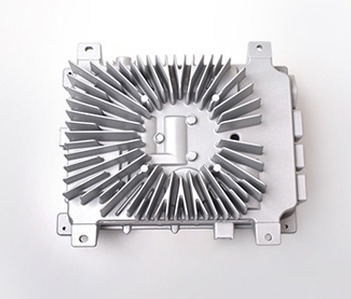
Choosing the Right Die Cast Aluminum Alloy for Your Project
In the high-stakes world of manufacturing, selecting the right material for die cast aluminum components is one of the most critical decisions an engineer can make. Die cast aluminum alloys are among the most versatile and widely used materials, offering an excellent balance of lightweight properties, strength, and castability. The process of die cast aluminum production forces molten metal into a mold cavity under high pressure, making material choice paramount.
Among the numerous options, three aluminum-silicon-copper alloys stand out as industry workhorses for die cast aluminum parts: ADC12 (a Japanese standard), A380 (an American standard), and ALSi9Cu3 (a European standard). While they may appear similar, each possesses unique characteristics that make it optimal for specific die-cast aluminum applications. This guide provides a detailed, technical comparison to help you make an informed decision for your next die cast aluminum project, ensuring your components perform reliably and cost-effectively.
The Top 3 Contenders: A Detailed Technical Breakdown
1. ADC12 (Japanese JIS H 5302 Standard)
ADC12 is a secondary alloy renowned in the die cast aluminum industry for its excellent castability and pressure tightness, making it a favorite for thin-walled, complex components produced through die cast aluminum processes.
| Key Characteristics & Composition | |
| Alloy Type | Hypoeutectic Al-Si-Cu alloy |
| Typical Composition | Silicon (9.6-12.0%), Copper (1.5-3.5%), Iron content (up to 1.3%) |
| Iron Function | This iron helps reduce die soldering during the die-cast aluminum process. |
| Mechanical Properties (As-Cast/F Temper) | |
| General Description | It offers good mechanical strength directly from the die cast aluminum machine. |
| Tensile Strength | ~230-310 MPa |
| Elongation | ~1-3% |
| Enhancements through Process & Heat Treatment | |
| General Note | While often used in the as-cast state, ADC12’s properties from the die cast aluminum process can be improved. |
| Advanced Techniques | Advanced techniques like Squeeze Casting (SQ) can reduce defects. |
| T6 Heat Treatment | Subsequent T6 heat treatment of these premium die cast aluminum components can boost tensile strength to approximately 380 MPa. |
| Typical Applications | |
| Intricate electronic housings, automotive parts (transmission cases, cylinder covers), and other components where the leak-proof integrity of die cast aluminum is crucial. | |
2. A380 (U.S. ASTM B85 / SAE 308 Standard)
A380 is arguably the most widely recognized and utilized die-casting alloy in North America, prized for its optimal balance of strength, fluidity, and machinability –
| Key Characteristics & Composition | |
| Composition | Si: 7.5-9.5%, Cu: 3-4%, Fe: up to 2% |
| Alloy Position | Places it at the higher end of silicon and copper content among common die-casting alloys. |
| Microstructure & Properties | This results in a complex microstructure with multiple intermetallic phases, contributing to its good strength at elevated temperatures. |
| Mechanical Properties (NADCA Data) | |
| Data Source | Data from organisations like NADCA (North American Die Casting Association) provide reliable benchmarks for A380. |
| As-Cast (F Temper) |
Tensile Strength: 262-324 MPa Yield Strength: 152-160 MPa Elongation: 2.0-3.5% |
| T5 Temper (Artificially Aged) |
Tensile Strength: ~324 MPa Elongation improves to 4-6% |
| The Corrosion Trade-off | |
| A notable consideration with A380 is its lower corrosion resistance compared to low-copper alloys. The high copper content (3-4%) creates copper-rich phases with a high standard electrode potential, making them susceptible to galvanic corrosion in humid or wet environments. | |
| Typical Applications | |
| Its “all-rounder” profile makes it suitable for a vast range of products, including automotive engine brackets and housings, power tools, lawnmower housings, furniture components, and electrical boxes. | |
3. ALSi9Cu3(Fe) / A226 (European EN 1706:2010 Standard)
ALSi9Cu3 is a high-performance secondary alloy that has gained immense popularity in Europe for its excellent combination of mechanical properties, cost-effectiveness, and good castability.
| Key Characteristics & Composition | |
| Nominal Composition | 9% Silicon and 3% Copper |
| Performance Sensitivity | Its performance is highly sensitive to the exact chemical composition within its specification limits. Variations can cause pronounced changes; for instance, yield strength in permanent mold cast samples can range from 100 to 200 MPa. |
| Mechanical Properties & Focus on Performance | |
| Primary Design Goal | This alloy is engineered for strength. |
| Common Manufacturing Processes | It is commonly used in both permanent mold and high-pressure die casting (HPDC). |
| Product Application | Used to produce structural components that require good toughness. |
| R&D Advancements | Research and development continue to push its boundaries. For example, modern modifications involving in-situ nano-reinforcements (like nano-ZrB₂) and optimized high-pressure casting methods aim to significantly enhance its fatigue resistance, damping properties, and strength-plasticity for demanding applications like high-performance engine mounts. |
| Typical Applications | |
| Automotive structural parts (shock towers, brackets), engine components, and other applications where a superior strength-to-cost ratio is required. | |
Head-to-Head Comparison & Decision Matrix
| Feature | ADC12 | A380 | ALSi9Cu3 (A226) |
|---|---|---|---|
| Primary Advantage | Excellent castability & pressure tightness | Best all-round balance; superior machinability | High strength-to-cost ratio; good castability |
| Typical Tensile Strength (As-Cast) | ~230-310 MPa | ~262-324 MPa | Highly variable; can reach 200+ MPa YS |
| Ductility (Elongation) | Moderate (1-3%) | Fair to Good (2-6%, depending on temper) | Can be limited; varies with composition |
| Corrosion Resistance | Fair (lower than low-Cu alloys) | Poorer (due to high Cu content) | Fair (typically lower Cu than A380) |
| Machinability | Good | Very Good | Good |
| Heat Treatability | Responds well to T6 (with suitable process) | Common to use T5; responds to T6 | Often used as-cast; can be heat treated |
| Common Applications | Complex, thin-walled housings | Engine brackets, tools, general hardware | Automotive structural parts, high-value components |
Aluminum Die Cast Alloy Selection Tool
Determine the most suitable aluminum alloy for your project (ADC12, A380, or ALSi9Cu3) by answering four key questions
Material Selection Results
Based on your selections, here is the suitability assessment for each material
Matching the Die-Cast Aluminum Alloy to the Mission
There is no single “best” die-cast aluminum alloy; the best alloy for your specific application. ADC12 excels in creating intricate, dense die-cast aluminum castings. A380 offers the most well-rounded set of properties for everyday industrial die-cast aluminum use. ALSi9Cu3 provides a compelling blend of strength and economics for performance-driven die-cast aluminum parts.
For the most authoritative data, always consult official standards and datasheets. By combining this technical knowledge with your project’s specific requirements, you can confidently select the die-cast aluminum alloy that will ensure performance, reliability, and value for your manufactured components.